
Our cornea services specialize in diagnosing and treating conditions that affect the clear, front surface of your eye, helping restore comfort and clarity to your vision. From infections and injuries to advanced corneal surgeries, we offer expert care tailored to your needs.
A corneal infection, also known as keratitis, is an inflammation of the cornea caused by bacteria, viruses, fungi, or parasites. It can result from poor contact lens hygiene, eye trauma, or contaminated water. Symptoms include eye pain, redness, blurred vision, and sensitivity to light.

Treatment
Treatment depends on the cause:
Prompt treatment is crucial to prevent vision loss and corneal scarring. In severe cases, a corneal transplant may be necessary. Proper eye care and hygiene can help prevent corneal infections. If symptoms occur, seek immediate medical attention from an eye specialist. Early treatment can significantly improve outcomes and preserve vision. Regular follow-ups are essential to monitor healing and adjust treatment as needed.
Penetrating Keratoplasty (PK) is a surgical procedure where a damaged or diseased cornea is replaced with a healthy donor cornea. The entire thickness of the central cornea is replaced with a donor graft. PK is typically performed to treat conditions such as advanced keratoconus, corneal scarring, and opaque corneas. The surgery aims to improve vision, provided the retina and optic nerve is healthy. Rarely it is used to treat extensive corneal infections, and to enhance the structural integrity of the eye. The donor cornea is usually sourced from an eye bank which in turn retrieves the eye from cadaver eye donation. Post-operative care involves immunosuppressive medications and close monitoring to prevent graft rejection.
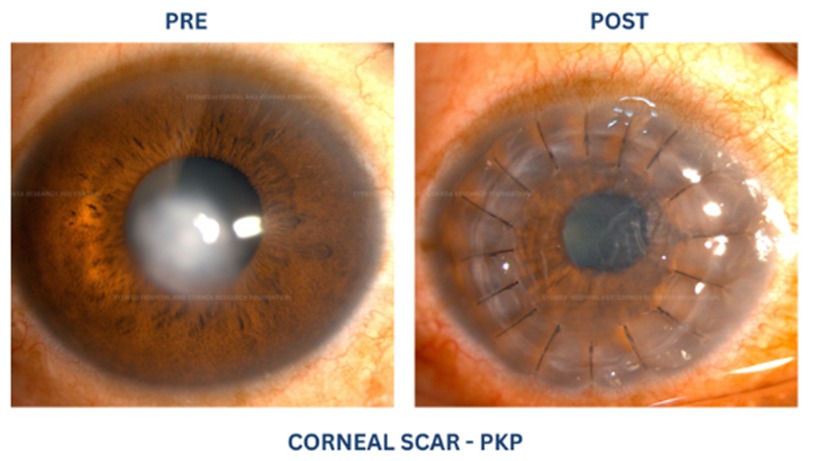
While PK has been effective in restoring vision, newer techniques like lamellar keratoplasty are gaining popularity. PK remains a viable option for patients with advanced corneal disease, offering improved vision and quality of life. Regular follow-ups are crucial to monitor graft health and address any complications.
Keratoconus is a progressive eye condition where the cornea, the clear dome-shaped surface, thins and bulges into a cone-like shape. This irregular curvature causes blurred vision, double vision, and sensitivity to light. Keratoconus often affects young adults and can lead to significant vision loss if left untreated. Symptoms may include frequent changes in eyeglass prescriptions, blurred vision, and eye strain.
Treatment options include specialized contact lenses, corneal cross-linking, and in advanced cases, corneal transplant. Early detection and treatment can help slow disease progression and preserve vision. Regular eye exams are crucial for monitoring keratoconus.

Collagen cross-linking is a minimally invasive treatment for keratoconus, a condition where the cornea thins and bulges. The procedure strengthens the cornea by creating new bonds between collagen fibers, stopping the progression of the disease. The procedure is typically performed in an outpatient setting and takes about 30-60 minutes. Eye drops are used to numb the eye, and the procedure is generally well-tolerated. Riboflavin (Vitamin B2) eye drops are applied to the cornea. The cornea is exposed to ultraviolet light, activating the riboflavin. The combination of riboflavin and UV light strengthens the corneal collagen fibers.

Benefits

Managing Director
M.D.(AIIMS) D.N.B., F.RCS (Edinburgh & Glasgow)
stethoscope_arrow Cataract Surgery, LASIK & Refractive Surgery, Cornea Services, General Ophthalmology
event_available OP Days:
Monday,Tuesday,Thursday